

You are not broken; instead, you are healing, even when every moment feels impossibly heavy. Moreover, your pain does not mean you have failed; rather, it shows that you are still here, still breathing, still trying despite everything.
Tonight may feel endless, and, consequently, every whisper in your mind might tell you that you should be stronger, further along, or “over it” by now. However, healing rarely follows a straight line; instead, it unfolds through surviving one small moment at a time while your nervous system slowly learns that safety is possible again.

Right now, you may feel exhausted by anxiety, grief, or heartbreak; nevertheless, beneath every wave of emotion, your brain and body are slowly rewiring themselves toward safety. Additionally, research on post-traumatic growth reveals that many individuals eventually discover new strength, deeper relationships, and a renewed sense of purpose after trauma.
Therefore, every time you get out of bed, answer one message, drink one glass of water, or choose not to give up, you are actively participating in your own healing process. Consequently, the version of you reading this right now is already more courageous than you realize.
Why Your Healing Journey Matters More Than Ever in 2024–2025
Healing matters profoundly in 2024–2025 because mental health struggles are no longer rare exceptions; instead, they represent the everyday reality for millions worldwide. Moreover, recent data show that approximately 23.4% of U.S. adults experienced mental illness in 2024, affecting over 61 million people—more than one in five adults.
Meanwhile, the World Health Organization reports that over one billion people globally are living with mental health conditions, yet nearly half of those who need care still do not receive it. Furthermore, the percentage of adults actively seeking mental health treatment has steadily risen from 19.2% in 2019 to 23.4% in 2024, demonstrating that more people are choosing healing over silence and shame.

This cultural moment, therefore, is not merely about surviving crisis; rather, it represents learning how to integrate your pain into a healthier, more compassionate life. Additionally, as conversations about therapy, trauma, and emotional recovery become increasingly mainstream, your personal healing becomes part of a much larger cultural shift toward honesty, support, and collective well-being.
Myths, Mistakes & Misunderstandings About Healing
Even though healing affects nearly everyone, powerful myths quietly keep people trapped in shame instead of supporting their progress. Therefore, this section gently dismantles those beliefs so you can view your journey more clearly and compassionately.
- Myth: “If I were truly strong, I wouldn’t be struggling.” In fact, trauma impacts the brain and nervous system directly, which means symptoms are natural responses rather than personal weakness.
- Myth: “Healing means I never feel pain again.” Instead, healing typically means you gradually gain tools to navigate pain without being consumed by it.
- Myth: “I should be over this by now.” However, recovery timelines are deeply individual, and emotional healing often takes longer than people expect.
- Myth: “Therapy is only for people with severe problems.” For example, therapy benefits anyone navigating life’s challenges, not just those with diagnosed conditions.
- Mistake: Comparing your healing to others’ journeys. Consequently, constant comparison can make you overlook subtle but real progress in your own life.
- Mistake: Expecting instant transformation. Meanwhile, genuine recovery requires patience, dedication, and willingness to engage in gradual work.
- Mistake: Avoiding all feelings to “stay strong.” For instance, pushing emotions down may provide short-term relief but usually prolongs distress long-term.
Healing Myths vs Empowering Truths
Actionable Tips & Practical Strategies for Your Healing Journey
Your healing does not need to be perfect; nevertheless, it does need to be intentional and compassionate. Consequently, the following strategies focus on small, repeatable actions that gently retrain your mind, body, and relationships toward safety and strength.
1. Name What You Actually Feel, Not What You “Should” Feel
First, pause for a moment and describe your current emotion in simple, honest language—sad, numb, angry, overwhelmed, relieved—rather than judging it. Additionally, linking your feelings to clear emotional awareness can help your brain organize the experience and reduce internal confusion.
Mini Example: You might automatically think, “I’m a complete mess,” but instead you say aloud, “I feel grief and exhaustion today.” Consequently, this simple shift moves you from harsh self-criticism to observable reality, creating enough emotional distance to choose a kinder next step like texting a trusted friend or taking a short walk outside.
2. Create a Tiny, Predictable Daily Ritual
Next, choose one small practice you can repeat daily—such as journaling for five minutes, stretching before bed, or making simple morning tea. Moreover, research shows that consistent routines help stabilize the nervous system and reduce feelings of chaos after trauma.
Mini Example: Every evening, you light a candle and write three sentences about your day, even when it feels pointless. Over time, however, this ritual gradually becomes evidence that you can show up for yourself, even on impossibly hard days.
3. Seek Safe Connection Instead of Total Isolation
Additionally, healing is often accelerated by being seen and believed, even if you share only 5% of your story at first. Therefore, you might schedule a weekly call with a friend, join an online support group, or explore therapy with a licensed professional who specializes in trauma recovery.
Mini Example: You join a small online community for people navigating divorce or burnout, and you quietly read posts for a week. Eventually, however, you leave a short comment saying, “I’m going through something similar,” and, consequently, you realize you are not facing this alone.
4. Work With Your Body, Not Just Your Thoughts
Many symptoms of trauma and stress live in the body—racing heart, tight chest, shallow breathing—so, meanwhile, physical practices can be surprisingly powerful. Simple tools like slow exhalations, gentle stretching, or short walks can signal safety to your nervous system, even before your mind fully believes it.
Mini Example: When anxiety spikes unexpectedly, you place your feet flat on the ground, notice five things you can see around you, and exhale slowly for six counts. Consequently, your body begins shifting out of “emergency mode,” which makes it easier to think clearly and respond wisely.
5. Rewrite Your Story From “Broken” to “Becoming”
Finally, consider journaling about your life as if you are the main character in a story of resilience rather than ruin. Additionally, research on post-traumatic growth suggests that creating a coherent narrative—one that includes both pain and strength—supports long-term healing and integration.
Mini Example: Instead of writing, “My life is completely over,” you write, “This chapter is the hardest I’ve known; however, I am slowly learning what I truly deserve and how I want to live moving forward.” As a result, your story shifts from helplessness to possibility, even if external circumstances have not fully changed yet.

Along the way, consider exploring more in-depth resources on rebuilding after major life transitions, such as articles on co-parenting or dating after divorce. Additionally, reading stories of others who rebuilt their lives piece by piece can validate your experience and offer new ideas for your own next steps.
Data, Quick Definitions & Trend Insights on Healing
Before moving further, it helps to clarify what “healing” actually means in psychological terms. According to clinical definition, healing from trauma often involves reduced symptoms, improved emotional regulation, and the emergence of new strengths and possibilities, rather than complete erasure of pain.
Similarly, mental health treatment data indicate that more people are actively engaging in this kind of healing work. In 2019, approximately 19.2% of adults in the United States received some form of mental health treatment; by 2022, about 21.8% did, and recent estimates for 2024 suggest roughly 23.4% sought support—representing steady growth over five years.
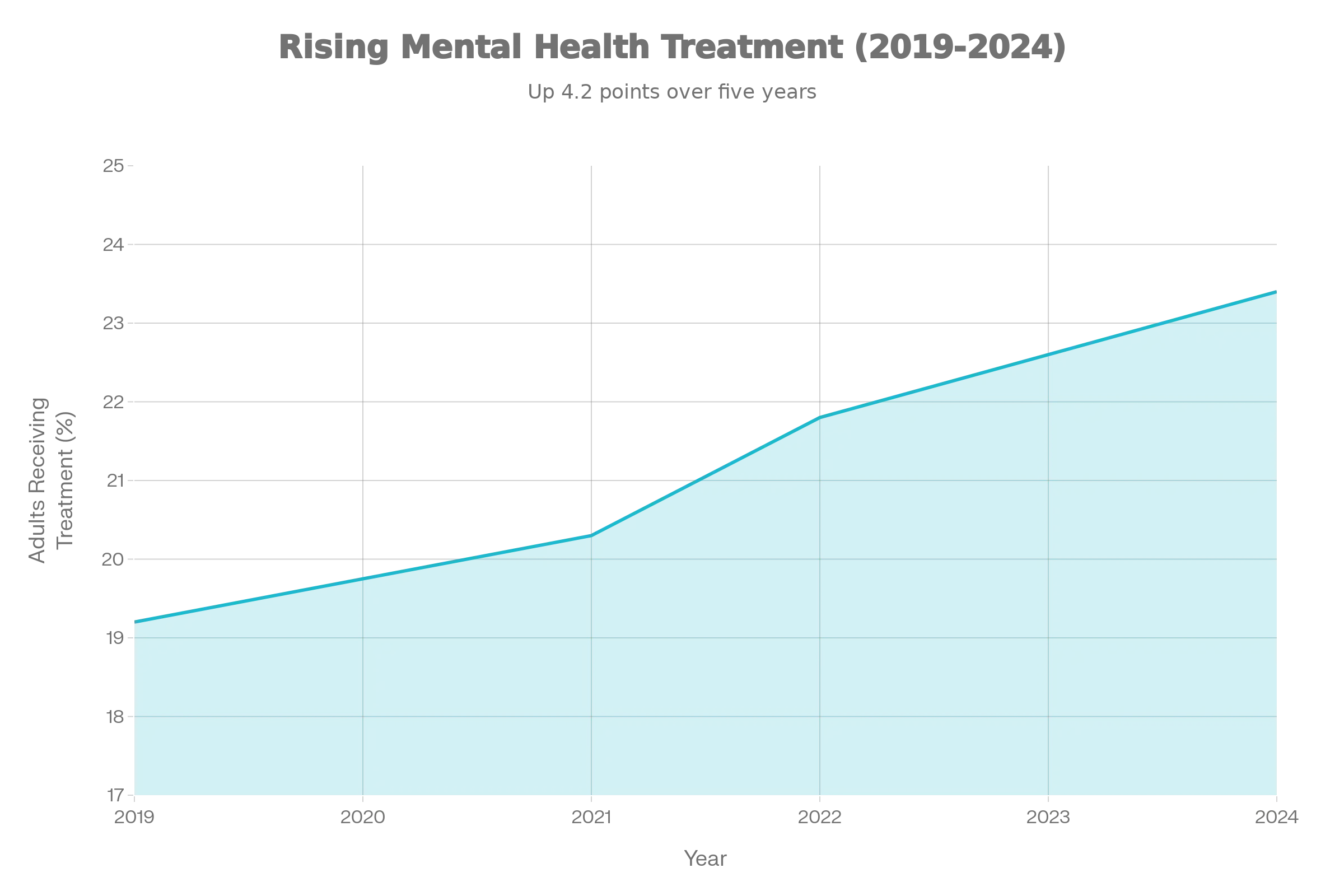
As a result, the trend clearly demonstrates that seeking help is becoming increasingly normalized, which directly challenges the myth that “everyone else is fine” and you are the only one struggling. Consequently, your decision to pursue healing—through therapy, coaching, support groups, or self-guided practices—places you within a growing, courageous movement of people choosing growth over silence.
Therefore, when you catch yourself thinking, “I should handle this completely alone,” remember that the world is moving in the opposite direction: toward connection, treatment, and open conversations about mental health. Additionally, as more people talk honestly about emotional recovery, it becomes easier for you to find language, tools, and communities that match your particular story and needs.
Comparison Breakdown: Traditional vs Modern Views of Healing
Healing used to be discussed mainly in hushed tones and private suffering; however, modern approaches are far more open, flexible, and grounded in neuroscience. Meanwhile, understanding the difference between old narratives and newer perspectives can help you choose what actually supports your growth today.
Traditional vs Modern Healing Perspectives
Alternatively, you can think of your journey as a “before vs after” mindset shift rather than a single dramatic transformation. Before, you might have believed that healing meant becoming exactly who you were before everything fell apart; however, after engaging in real healing work, you learn that recovery often means becoming someone wiser, kinder, and more grounded than you were before.
At the same time, every approach has pros and cons, so you are allowed to choose what fits your energy, resources, culture, and personal values. For some, formal therapy is life-changing; for others, a mix of community support, spiritual practices, and self-education works best, and, consequently, your path can be uniquely yours without being wrong or inferior.
Conclusion: You Are Still Becoming
Right now, it may feel like you are standing in the ruins of the life you thought you would have; however, these ruins are also the fertile ground where something new can slowly grow and take root. Ultimately, healing does not erase what happened, but it can transform how what happened lives inside you and shapes your future.
Therefore, the next time your mind whispers, “You are broken beyond repair,” gently answer back: “I am healing, even when I cannot see all of it yet.” Additionally, consider exploring more articles on rebuilding after divorce, navigating co-parenting challenges, or embracing new beginnings after major life transitions, so you can keep surrounding yourself with voices that remind you of your inherent strength and worth.
In the end, your story is not over; instead, you are in the middle of a chapter that will one day make profound sense in ways you cannot fully see from here. Moreover, each small step you take toward healing—no matter how tiny it feels—is writing the next page of your remarkable story of resilience and growth.

So, if this letter spoke to something deep inside you, share a line that resonated in the comments below, send this to someone who feels alone tonight, or subscribe to receive more gentle, practical support as you continue your healing journey. Remember: you are not broken—you are becoming.